SITE
SETUP









SKU: 6171-CCJM450
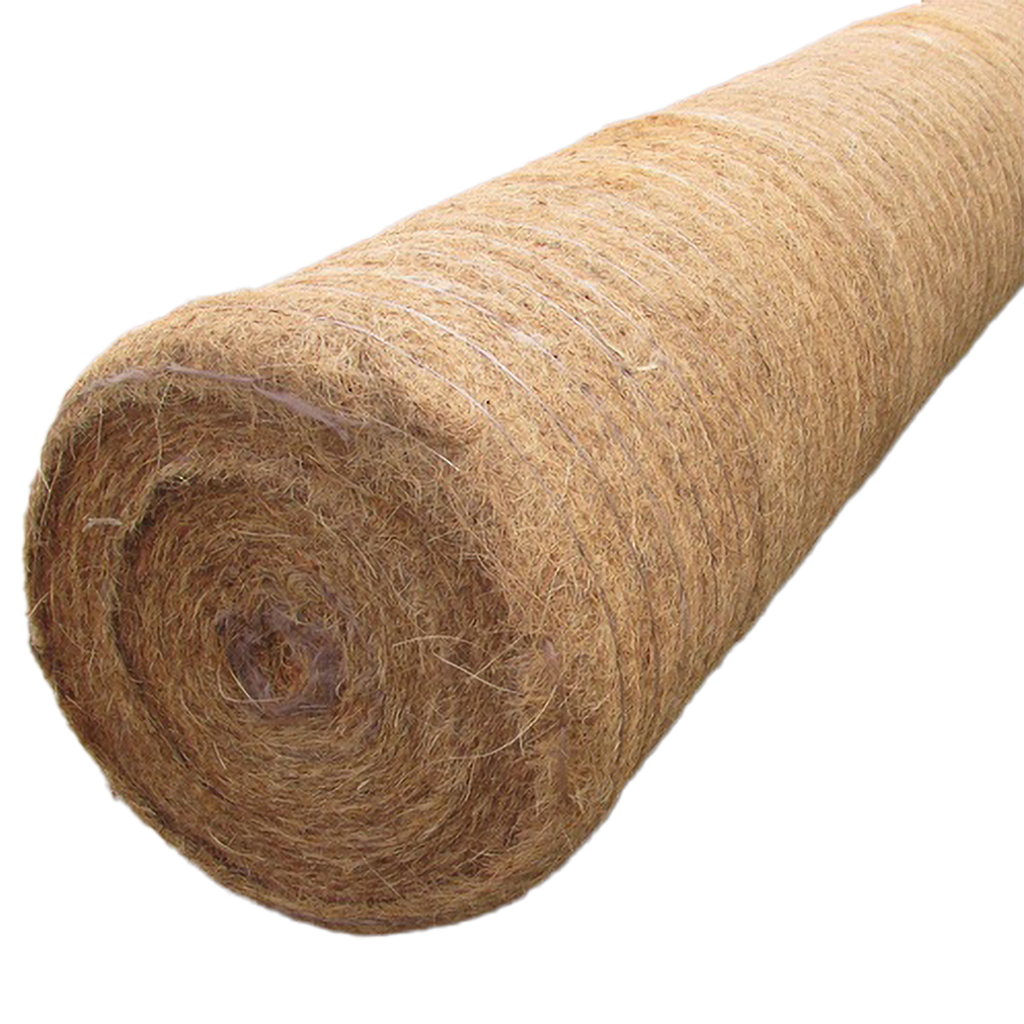
Coconut Matting 450gsm covers exposed soil on the steeper cuts and higher-flow channels where a lighter mat won't hold. Bare ground on a steep batter or a channel carrying stormwater is under constant pressure: fast-moving water scours loose soil away, and steep grades give rain nowhere to slow down before it hits the surface. This mat carries more coir fibre per square metre than the standard 300gsm option, so it has more mass to resist scour while the open weave still lets light and water reach the seed underneath. Each roll covers 2m x 50m and weighs around 40kg. It's stitched together with jute twine and is fully biodegradable. It breaks down naturally as vegetation establishes over the site. Civil and earthworks crews reach for the 450gsm option on steeper batters and higher-flow drainage lines, where the standard weight isn't enough to hold through the first heavy rain.
Need a quote? Simply add to cart and you have the option to request a quote before checkout
Coconut Matting 450gsm covers exposed soil on the steeper cuts and higher-flow channels where a lighter mat won’t hold. Bare ground on a steep batter or a channel carrying stormwater is under constant pressure: fast-moving water scours loose soil away, and steep grades give rain nowhere to slow down before it hits the surface. This mat carries more coir fibre per square metre than the standard 300gsm option, so it has more mass to resist scour while the open weave still lets light and water reach the seed underneath. Each roll covers 2m x 50m and weighs around 40kg. It’s stitched together with jute twine and is fully biodegradable. It breaks down naturally as vegetation establishes over the site. Civil and earthworks crews reach for the 450gsm option on steeper batters and higher-flow drainage lines, where the standard weight isn’t enough to hold through the first heavy rain.
| Specification | Details |
|---|---|
| Width | 2 m |
| Length | 50 m |
| Weight | 40 kg |
| GSM | 450 gsm |
| Binding | Jute twine |
| Biodegradable | Yes |
Download your Coconut Matting Jute resources:
Coconut Matting Jute does not have any Safety Data Sheets. Request here
About Coconut Matting Jute
It carries more coir fibre per square metre, so it has more mass to resist fast-moving water. Use it on steeper batters and higher-flow channels where the 300gsm option isn't enough.
Each roll covers 2m x 50m and weighs around 40kg, the same footprint as the standard matting, just heavier per metre.
It's 100% coir, which is coconut fibre, stitched together with jute twine. Both materials are fully biodegradable.
Yes. The weave is still open enough to let light and water reach the seed underneath, so grass germinates and grows up through it as it breaks down.
Pin it down close to the soil surface with ground staples along the edges and down the length of the roll, the same way as the standard matting. Good soil contact is what makes it effective.
Yes. It's the heavier of the two coir matting weights Powerpac stocks, so it's the better choice for steep batters and demanding channel work. For extreme gradients or engineered installations, check with Powerpac for exact slope and flow ratings before specifying.
It's fully biodegradable and stays in place, breaking down naturally into the soil as the site's vegetation establishes. Heavier gsm mats generally hold together longer than lighter ones before they do.
Yes. Coir mat, coir matting, coconut fibre mat and erosion control blanket are all names used for this category of product, and this is the heavy duty coir mat option in Powerpac's range.
Coconut Matting Jute
We suggest following the steps above for the best installation results. If you have any questions or need assistance, our team is here to help.